
When U.S. Documents Need to Travel Abroad, an Apostille May Be Required

Updated: 3 days ago
An apostille is an official certificate that authenticates the signature, seal, or official capacity associated with a qualifying document. It is used by countries that participate in the Hague Apostille Convention. The certificate helps the document move through an international process, but it does not verify the document’s contents or guarantee that a foreign organization will accept it.

The destination country and the organization receiving the document determine what is required. If the country is not part of the Hague Convention, the document may instead need an authentication certificate and additional consular or embassy legalization. Some organizations also require a particular document format, a certified copy, or a translation.
Apostille Documents for Business, Education, and Family Matters
Businesses expanding overseas may be asked for various documents. These can include company registration records, a certificate of good standing, corporate resolutions, or a Power of Attorney. For an Ohio company, certain records may be obtained from the Ohio Secretary of State. These records should be submitted for the appropriate certification, depending on the destination and the receiving authority’s instructions.
Education and Apostille Requirements
Students continuing their education abroad often need specific documents. They may require an apostilled diploma, transcript, or academic record. The school that issued the document may need to certify it or complete a verification step before submission. This ensures that the documents meet the receiving authority's standards.
Family Matters and Apostille Needs
Families may need various records for different purposes. Birth, death, or marriage records may be necessary for dual citizenship applications, inheritance matters, or family registration in another country. These records typically must come from the appropriate issuing office in the required certified form. An ordinary photocopy or scan may not meet the receiving authority’s requirements.
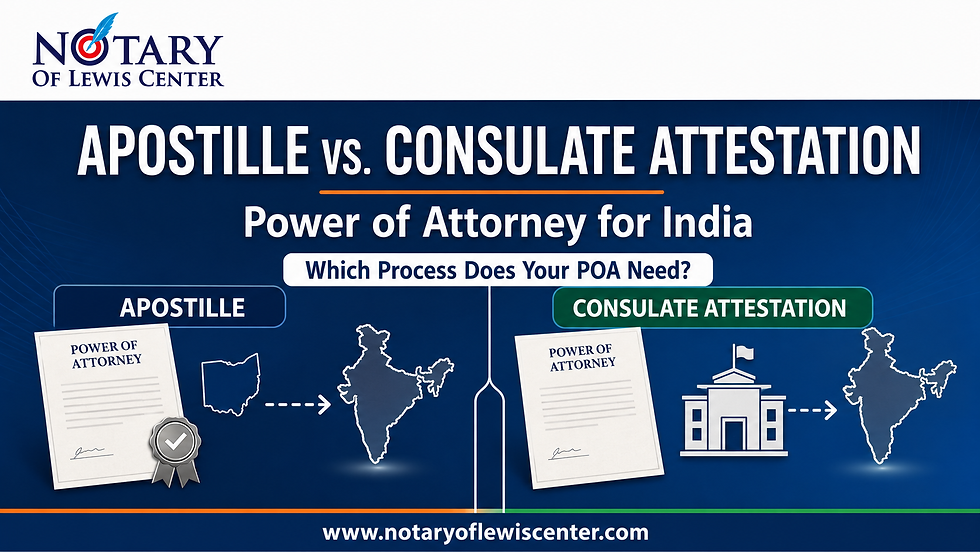
A Power of Attorney may also need to be notarized and apostilled or authenticated before someone can use it abroad. Because requirements can differ by country and purpose, it is essential to confirm the instructions before signing. Some documents require specific wording, witnesses, or translation.
For more information, you can visit our International Apostille Service.
The Process Depends on the Document
There is no single apostille process for every U.S. document. The issuing authority and destination country help determine where the document must go. Qualifying Ohio records and documents notarized by an Ohio notary may be handled through the Ohio Secretary of State. Documents issued in another state or by a federal agency generally follow different routes.
Steps to Follow for Apostille Services
The first step is to ask the receiving organization for written instructions. Those instructions can help identify whether the document needs an apostille, an authentication certificate, a certified copy, a translation, or further legalization.
Notary of Lewis Center assists individuals, families, students, and businesses with organizing apostille and authentication requests. The business can review clear scans and receiving-authority instructions. They explain the likely processing route, provide an estimate of service and shipping costs, and coordinate eligible document preparation, submission, and delivery.
“Reviewing the instructions before someone mails an original can help identify missing steps and reduce avoidable delays,” says Chalasani. “The government office that processes the document makes the final decision about eligibility and requirements.”
Understanding Notarization and Apostille Certification
Notarization and apostille certification are separate steps. A notary may perform an eligible notarial act; the apostille or authentication is issued by the appropriate government authority. Notary of Lewis Center does not draft legal documents, interpret foreign law, or guarantee that a document will be accepted by a foreign organization. For legal advice or country-specific requirements, people should consult a qualified professional or the receiving authority.
Before requesting help, gather the destination country, the receiving organization’s instructions, the document type and issuing authority, and the desired deadline. Share scans for review before mailing original documents, and confirm the process and delivery arrangements first.
Conclusion
Notary of Lewis Center serves Lewis Center and Central Ohio. For document-review and apostille-service information, call or text (614) 438-5859 or visit notaryoflewiscenter.com. Understanding the requirements and processes involved in obtaining an apostille can save time and reduce stress. Make sure to follow the guidelines carefully to ensure that your documents are processed smoothly.

Comments